

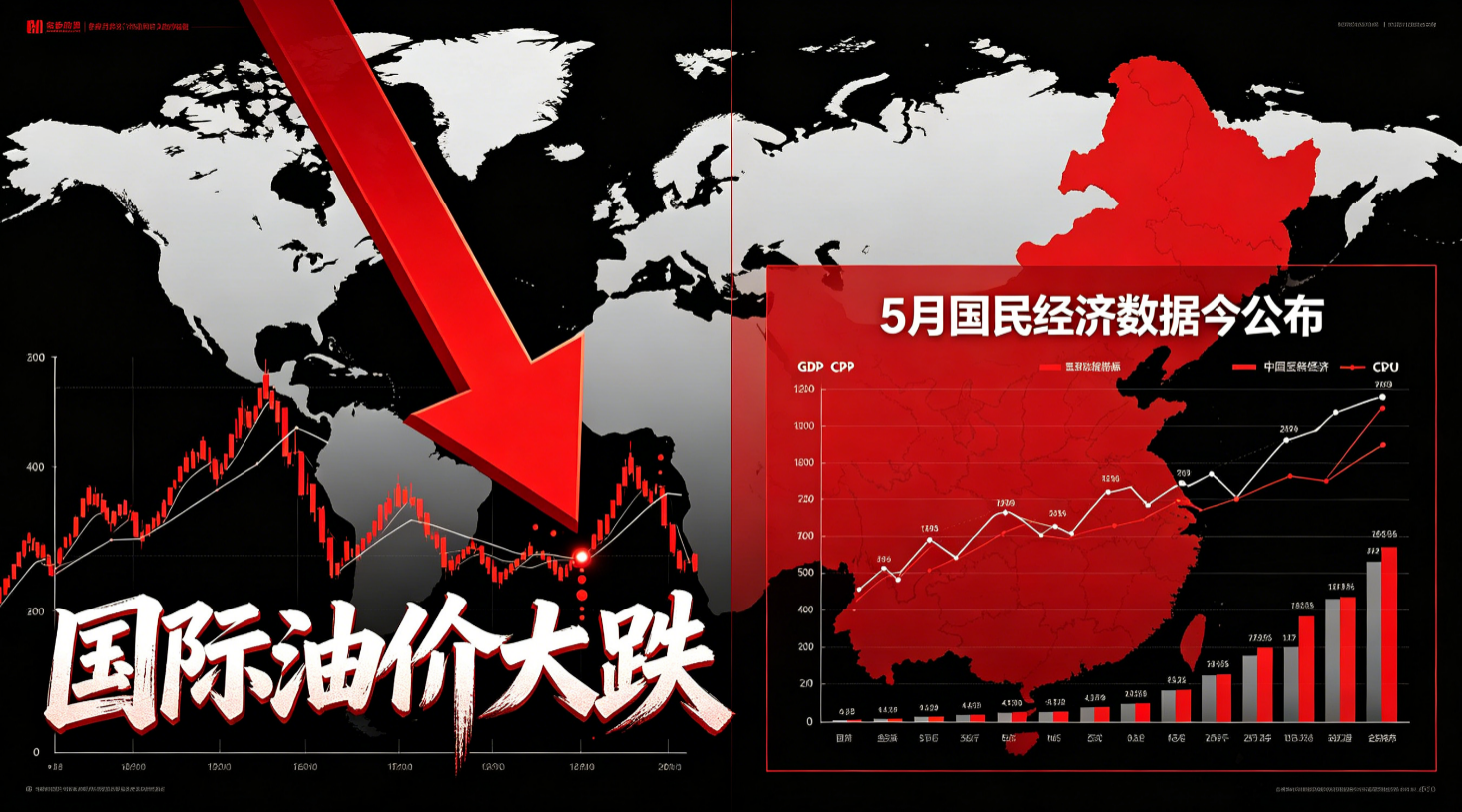

Global Financial Market Situation June 15: China-US Stocks Surge While Crude Oil Plunges
Keywords: Chinese stock market, US stock market, crude oil prices, global economy, investment, Nasdaq Index, Shanghai Composite, WTI, Brent, capital market adjustments
Introduction
June 15 marked another day when global financial markets showed significantly divergent movements. Stock markets in both China and the United States closed strongly in positive territory, reflecting a rebound in investor confidence, especially in technology and innovation stocks. Meanwhile, the global crude oil market faced heavy selling pressure, causing both WTI and Brent crude oil prices to drop nearly 5%. This contrasting movement indicates differing views among investors on the outlook for the global economy going forward. This article analyzes the factors behind the movements of each market and links their interrelationships, providing readers with an understanding of the overall global economic and financial situation.
Chinese Stock Market: Strong Recovery in Technology Stocks
On that day, the Shanghai Composite Index rose 1.61% to close at 4,096.47 points, while the Shenzhen Component Index increased 3.79% to close at 15,531.11 points. The ChiNext Index, which tracks technology and innovation stocks, surged 5.3% to close at 4,033.53 points, making it the most outstanding performer among China's major stock indices.
The sharp rise in the ChiNext Index in particular indicates that investors have growing confidence in Chinese technology stocks and innovative companies. Key factors supporting this uptrend include the Chinese government's announcement of policies to promote the technology industry, especially in artificial intelligence (AI), clean energy, and electric vehicles—industries prioritized by the government. Additionally, the latest economic data from China shows continued recovery, particularly in manufacturing and domestic consumption, which helps bolster investor confidence.
Another factor to consider is the increased inflow of foreign capital. After facing pressure earlier, foreign investors see the Chinese stock market, especially technology stocks, as having high growth potential and reasonable valuations. The ChiNext Index's 5.3% single-day surge thus reflects positive expectations for China's economic policies and development direction.
US Stock Market: Nasdaq Leads the Rally
In the United States, stock markets also closed in positive territory. The Dow Jones Industrial Average rose 468.77 points, or 0.92%, to close at 51,671.03 points. The S&P 500 increased by 122.83 points, or 1.65%, to close at 7,554.29 points. The Nasdaq Composite Index, which tracks technology stocks, surged 795.10 points, or 3.07%, to close at 26,683.94 points.
The standout performance of the Nasdaq reflects investors returning their focus to technology stocks after a period of volatility. A key supportive factor is the hope that the Federal Reserve may slow or halt interest rate hikes in the near term, following signs that inflation is beginning to ease. Additionally, better-than-expected earnings reports from several major technology companies have helped boost confidence.
The more modest gains in the S&P 500 and Dow Jones compared to the Nasdaq show that the recovery remains concentrated in technology stocks. In contrast, traditional industrial and energy stocks faced pressure from concerns about the global economic outlook, especially due to weak economic data from some countries. Nevertheless, the simultaneous rise of all three US stock indices remains a positive signal for the overall US economy.
Crude Oil Prices: Plunge on Demand Concerns
In contrast, the global crude oil market closed sharply lower. West Texas Intermediate (WTI) crude oil for July delivery fell $4.13, or 4.87%, to close at $80.75 per barrel. Brent crude oil for August delivery dropped $4.16, or 4.76%, to close at $83.17 per barrel.
The main reason for the sharp decline in oil prices is growing concern about global oil demand, particularly after OPEC announced an increase in production capacity, raising worries that the market may face a supply glut. Additionally, weak economic data from China, the world's largest oil importer, weighed on oil prices as investors fear that China's economic recovery may slow, reducing oil demand.
Another factor is the strengthening of the US dollar, which reduces the purchasing power of other currencies for dollar-denominated oil. Moreover, ongoing concerns about a recession in major economies, especially Europe and the US, continue to exert pressure.

